








#173 The Need to Deprogram False Data Regarding TMD
Whether you’re a patient with symptoms of temporomandibular Joint Disorder (TMD), or a doctor who treats patients with the disease, there is a 99% chance you have false fixed ideas regarding the problem. I have written over 170 articles on this blog and over 250 recordings on my podcast, “TMD Demystified” on this topic. After over 50 years treating TMD, the first 36 surgically, and the last 16 years and over 5000 patients non-surgically, there is one thing I know for sure. If a person is going to understand TMD, they must first lose or get rid of their inaccurate, false, and fixed ideas about the problem. Until they erase the bad information, they will never be able to see the truth of the correct information. This is called Confirmation Bias.
Confirmation bias is a cognitive bias that involves the tendency to search for, interpret, favor, and recall information in a way that confirms or supports one’s prior beliefs or values. It is largely unintentional and often leads people to overlook or discredit information that contradicts their views. (1) In practice, when trying to educate a person regarding the facts or truth on a subject, there is a constant subliminal mechanism attempting to compare the new information to the information they have already been given or exposed to. That is why trying to educate patients and doctors about TMD is so difficult. They almost always want to compare the new information against the old information and unconsciously conflate or confuse the two separate sets of knowledge.
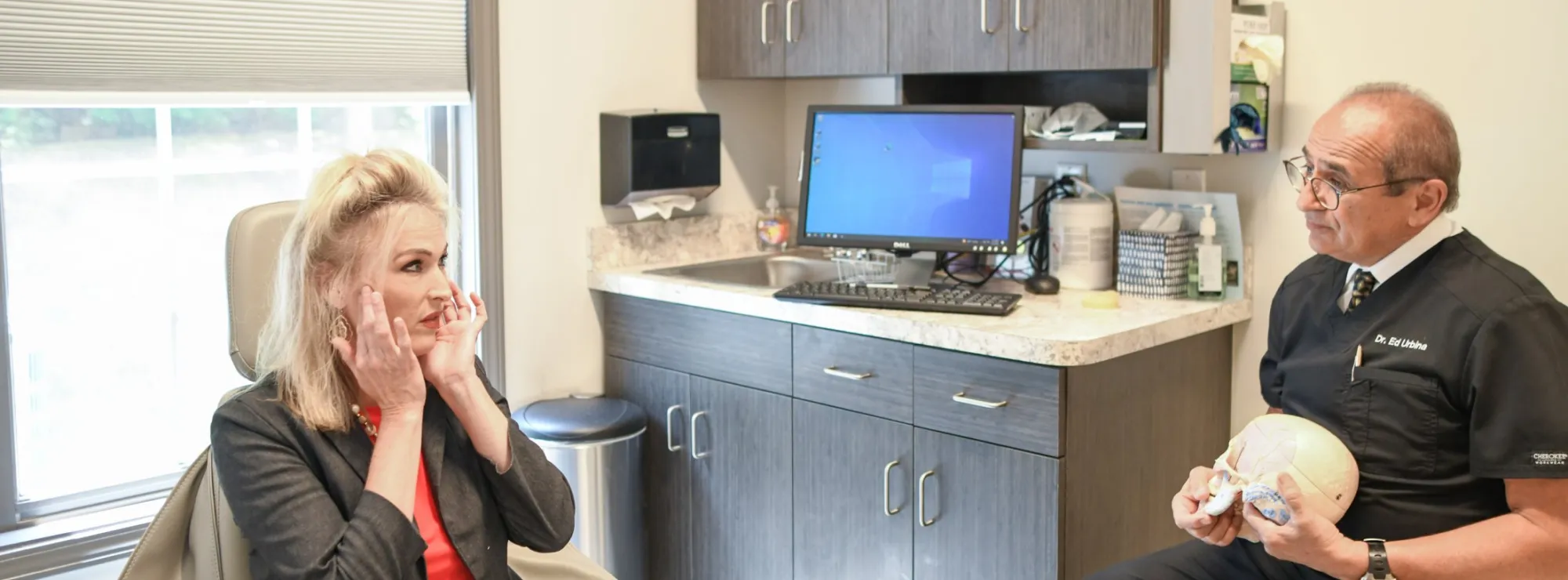
When I do consultations with TMD patients, or talk to another doctor about TMD, I consistently say two things. 1. “Half of my job is to educate you about the problem, and the other half is to make the symptoms go away” and 2. “Whatever you know, think you know, have read on the internet, or heard from another health care provider, please write it on an imaginary
blackboard/whiteboard and erase it.” “When I’m finished, you can write it on the board again if you wish.” This is my attempt to remove confirmation bias in order to get my new information fully understood. When the patient or doctor fully understands the information I present, I almost always hear, “That makes sense.” And often I hear from patients, “You are the first doctor who ever explained TMD/TMJ to me that made any sense.” When I hear either of these statements, I know I have been successful in removing the confirmation bias that stood in the way of full and complete understanding.
There are hundreds of pieces of bias regarding TMD created from who knows where. It’s impossible to convince a person they should not believe something they already believe is true. It is a waste of time to try to do so. That only creates an atmosphere of confrontation about who knows more, who knows better, or who is smarter. That is always a losing battle and a waste of time. The right thing to do is to simply ask the person to take up all the information they think they know about the subject, put it aside for a while, and just listen to the new information and see if it makes sense to them. In this way, you will gain significant credibility on the subject if it makes sense to the listener. This method of instruction can also be applied to an individual who is independently studying a subject. When it is applied on an individual basis, it is called Critical Thinking.
I will give just one, but the most common and blatant example of confirmation bias and lack of critical thinking that applies to TMD. Fifty percent of dentists prescribe a night guard for TMD symptoms but cannot explain to the patient how a night guard works to make the symptoms go away. That is what dentists are taught to do in dental school, and therefore, that is what they do. This is the definition of lack of critical thinking. When you try to teach those dentists about the real cause and solution for TMD, they can’t understand what you are saying because of their confirmation bias. Likewise, patients are told the night guard is the solution without explanation. Without critical thinking on top of their confirmation bias based on prior information, they cannot understand the correct information without deprogramming. The solution is to erase the blackboard. You can always write it again if you must. (1) Wikipedia
Comments are closed.