






#133 Less is Better When Treating TMD
The treatment of TMD has become a very controversial topic. It is much more than simply controversial; it is a conundrum wrapped in an enigma. It is a very common disease. Roughly, 45% of the females in the US exhibit TMD symptoms. It is almost an exclusive female disease with a prevalence of 90% females and 10% males.
Until recently, the entire theory regarding cause was justified by an article written by one of my Oral and Maxillofacial Surgery colleagues, Dr. Daniel Laskin, int the July, 1969 issue of the Journal of the American Dental Association entitled “Etiology of the Pain-Dysfunction Syndrome. In that article Dr. Laskin openly admits that his article is only his theory for explaining the cause of TMD. But somehow the dental profession didn’t completely read his article and chose to accept it as fact. Ever since July of 1969 the dental profession has operated as if the “Myofacial Pain-Dysfunction Syndrome” is fact rather than theory. Beginning with that mistake, dentistry was off to a very bad start in trying to solve the conundrum wrapped in an enigma.
Dentistry’s second big mistake was teaching every dental student in the United States that the TMJ, (Temporomandibular Joint) is an extremely complicated and unique joint, unlike every other joint in the body. That, in itself, is a big lie but gave the dental profession the excuse they needed to justify offering no real help to the patients who suffer from the disease. It does have a complicated classification as ginglymo-arthrodial joint. But a complicated Latin name does not make it a complicated joint. The TMJ operates physiologically like any other joint int the body. Strike two against the dental profession.
Strike three was the dental profession insisting on treating symptoms and not looking for the cause of the symptoms. The dental profession was enjoined by medical profession who just attacked the symptoms without any consideration as to cause. And to make matters worse, the medical profession often misdiagnosed the symptoms of TMD with other well-known diseases such as Migraine Headaches, Meniere’s Disease, and ear infections.
It is easy to see why TMD got reputation as a mystery, wrapped in a conundrum, buried in an enigma.
The truth is TMD is a very simple disease to understand. If the orthopedic doctors had not given the TMJ to the dentists to fix, TMD would have been solved 60 years ago. Tennis Elbow and TMD are the same disease, just different joints. And both can be treated successfully using an identical method. “Rest the Joint” “Unload the elbow with a sling and the TMJ with a device that unloads the TMJ like a set of crutches unloads a painful knee.
By the way, a night guard is not useful in treating TMD. We routinely see patients arrive for consultation with 5 or 6 night guards in a paper bag made by several different dentists.
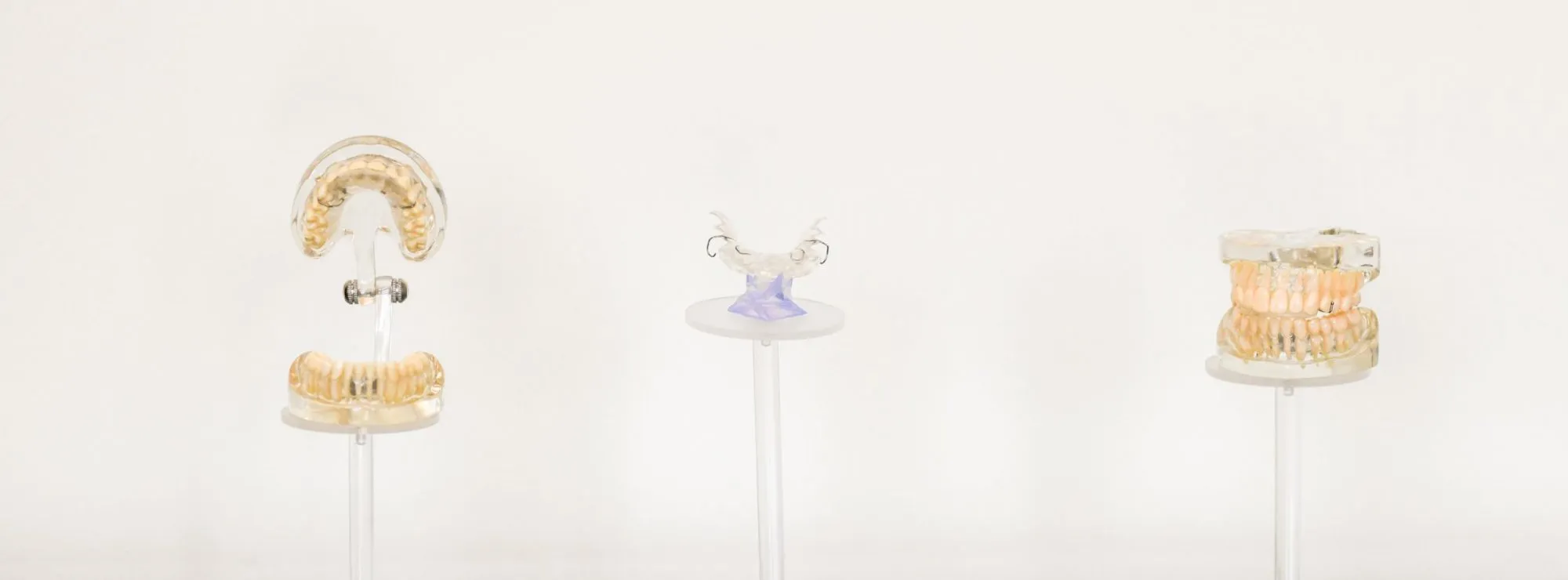
While a student in both dental and medical school I was taught to treat patients using the simplest method available with the least number of side effects or unintended consequences. Once I discovered the cause of all the symptoms of TMD were driven by chronic inflammation within the TMJ, it was relatively simple to design an oral device that rests the TMJ and the proper protocol for its use. That device and protocol is now referred to as the Urbanek Device and Protocol and used by a growing list of doctors in 18 states.
Instead of treating the symptoms of TMD with a long list of drugs with a longer list of side effects, surgery with a long list of complications, physical therapy, and psychologic/psychiatric treatment, the Urbanek Device and Protocol exemplifies “Less is Better”. The device is used 24/7 for 2 months except while eating and then at night the rest of your life. It’s simple, non-invasive, and essentially home care once the patient learns how to use it correctly.
Less is Better is a good rule to follow in health care and many other areas in life.
Comments are closed.