



#89 Experience, the Most Important Factor in Treating TMD/TMJ Successfully
- direct observation of or participation in events as a basis of knowledge
- the fact or state of having been affected by or gained knowledge through direct observation or participation
The first question to ask about experience is: Whose experience are we asking about? Is it the experience of the doctor or the experience of the patient?
Both are important. Doctor and patient together determine the outcome of treatment depending on their different experiences as defined by 1, and 2.
Each participant has different opportunities for experience.
The doctor has the opportunity to study the disease in detail through textbooks, journals, conventions, discussions with other doctors, discussions with patients who suffer from the disease, and, of course, the number of patients already treated. The doctor is also affected by the knowledge gained through this direct observation and participation. (Definition 2.) He can feel secure in this knowledge gained or insecure that the knowledge gained is insufficient to treat the problem.
Unlike the doctor, the patient does not have the opportunity to study the disease in detail apart from asking a trusted friend or family member, and most recently asking Dr. Google. The patient’s experience is derived from the symptoms themselves, which may have occurred over a short or long period of time, gained through direct observation and participation. Most importantly, the patients are affected by their direct knowledge of their symptoms and their direct knowledge and participation with other medical providers they have seen for their symptoms. They may feel secure in their knowledge that the current consultation is the right thing to do, or they may question the validity of the consultation.
The lack of success with other medical providers seen for the symptoms of TMD/TMJ has a large part to play on how the patient considers their experience with the current provider offering a solution for their TMD/TMJ symptoms. Prior ineffective treatments generate skepticism and concern from the patient which makes developing a proper doctor/patient relationship more difficult.
Stated simply, the doctor is affected by the prior experience of the patient, and the patient is affected by the prior experience of the doctor. Therefore, both doctor and patient have the responsibility to share their experience, or lack their-of, openly and honestly, in order to end up with the best possible treatment result.
Having successfully treated over 4000 TMD/TMJ patients with our FDA cleared, non-surgical, patented, independent university validated device and protocol, it is vitally obvious that sharing experience between doctor and patient is “the most important factor in treating this problem successfully”.
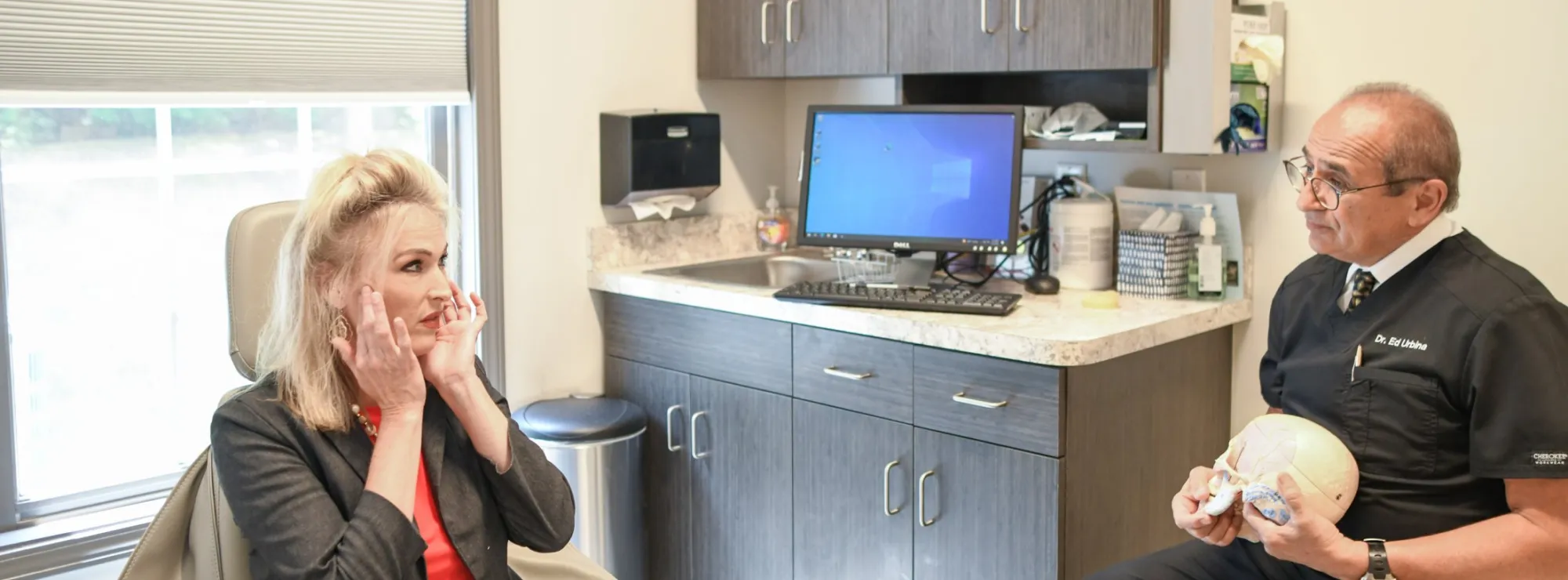
Nothing supplants or is more important during a health care consultation than a full and transparent discussion between doctor and patient. It has been my experience that a flowing two-way discussion with patients is the best way to share experience and formulate the best way to solve a problem.
If you think your symptoms are derived from your temporomandibular joints don’t hesitate to schedule a consultation with us at TMJ Services of Brentwood to share your experience.
Comments are closed.