





#88 TMD/TMJ is Actually an Orthopedic Disease
If TMD/TMJ is an orthopedic disease, why is it treated by dentists, Orthodontists, and Oral and Maxillofacial Surgeons? The answer to that question is quite convoluted and troubling.
The story of TMD/TMJ began in 1936 with an article in a Texas medical journal by an ENT physician by the name of James Costen. Dr. Costen was the first to describe the relationship of the symptoms of TMD/TMJ to the temporomandibular joint. For the better part of the next 30 years the apparently unrelated symptoms of headaches, facial pains, neck pains, ringing in the ears, fullness of the ears, and vertigo was referred to as Costen’s Syndrome. Dr. Costen theorized that the problem was caused by the patient’s missing back teeth. In other words, he felt it was a dental related problem. From that point forward, the horses were out of the barn, and they were not going back in.
In 1947, the year I was born, an article was published in the Journal of the American Dental Association, by Dr. LG Parry reporting on two cases of Costen’s Syndrome which described the usual symptoms, and he theorized the problem was caused by overclosure of the bite.
With this article the dental profession took increasingly more control over this disease since it had something to do with teeth. But no one knew for sure what part teeth had to do with creating the problem. Was it lack of teeth? Was it misaligned teeth? Was it grinding of the teeth?
The teeth were attached to the jaw and the jaw had two temporomandibular joints, so if you fix the teeth, it must have something to do with fixing the jaw joints. That was the theory. And fixing teeth is what dentistry is all about. So, dentists began fixing the temporomandibular joint problem by fixing teeth, in spite of not understanding what causes all the disparate symptoms.
From 1947 on, during the span of my own life, dentists began experimenting and theorizing and throwing things at the wall to see if they’d stick. As it turned out, that was not such a good method for solving a problem because it led to many misadventures by the dental community at sometimes catastrophic expense to the patients. In the extreme, general dentists, who were skilled at reconstructing teeth, sometimes placed crowns (caps) on all 28 teeth in order to rebuild the entire bite to a new position. The Oral and Maxillofacial Surgeons began to try various types of joint surgery removing some pieces of the joint, sometimes the entire joint, and replacing the pieces removed with artificial replacements. I personally participated in this wild goose chase for 36 years. And the Orthodontists began to do what orthodontists do by getting the teeth straight and fitting together perfectly without consideration of the affect traction on the jaws had on joint health and facial growth and development.
No one, until recently, looked at the problem like the orthopedic doctors look at damaged joints under their care and supervision. Orthopedic doctors never got the chance to share their knowledge about joints with the dental establishment. They were busy with all the other joints of the body and the dentists were busy trying to figure out what to do about the Temporomandibular joints and they never shared information.
But the orthopedic doctors knew all about the phenomenon they call “joint splinting”. And the dental doctors never asked the orthopedic doctors to tell them what they knew about joints in general or this thing called “joint splinting”. The dental doctors kept thinking the TMJ is a very unique and different joint, unlike all the other joints in the body. Every dentist is taught this in dental school as fact, even currently. But that is the big lie which precipitated the whole dilemma and conundrum.
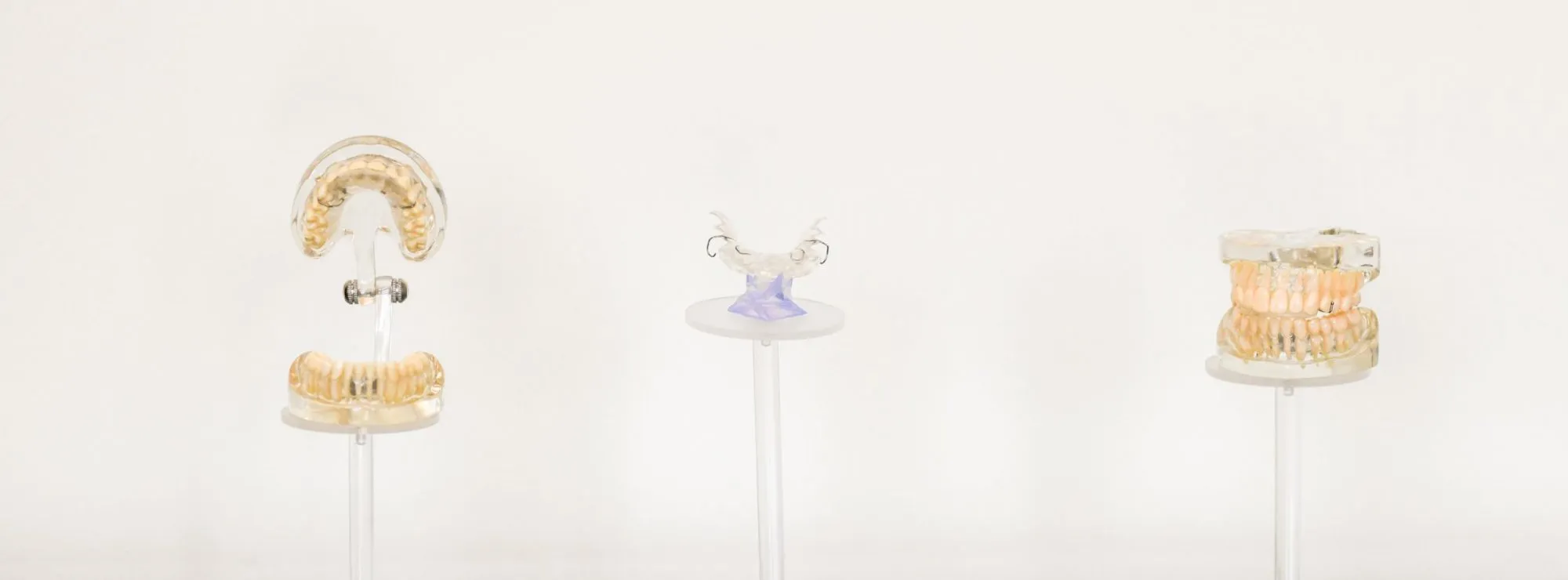
Joint splinting is a phrase which describes how the brain tries to help a damaged joint by telling the muscles that move the joint to tighten up and hold the joint motionless. It sends a signal to splint the joint. This is why damage in the elbow joint creates pain in the forearm. And this is why damage in the TMJ creates pain in the muscles in all the areas of the face that move the jaw joint. Tennis elbow and TMD/TMJ are the same disease in different joints. Tennis elbow is best treated by placing the arm in a sling, and TMD/TMJ is best treated by placing the jaw in a device that rests the jaw joint. We call that device the Urbanek Device and Protocol.
Tennis elbow and TMD/TMJ are orthopedic diseases and treated best in a similar fashion.
Comments are closed.