




#190 Treat TMD With Coordinated Thought Not Specialists
I am sorry to say that the profession of dentistry has missed the mark after 70 years of trying to figure out how to treat Temporomandibular Joint Disorder (TMD). For 70 years it has been a disorganized journey because the scientific investigators in the dental establishment claimed the Temporomandibular Joint, (TMJ) was different from all the other joints in the body. All the dental schools teach that the TMJ is different from all the other joints. Every young dentist comes out of school with a dental degree thinking the TMJ is different from all the other joints in the body. But if the investigators and professors would just step back for a moment and ask one simple question the entire conundrum of TMD could have been solved 50 years ago.
The logical question to ask would be, “Why would the TMJ be singled out as operating with different biomechanical principles from other joints? The truth is all joints operate using the same principles of physics, gravity, cell biology, muscle and bone physiology, biochemistry, neurophysiology, anatomy, histology, endocrinology, immunology, and vascular requirements.
The only thing that makes the TMJ unusual is that it has two simultaneous motions. All other joints have but one type of motion. Some joints rotate and act like a hinge. Joints that have a hinge motion are classified as ginglymus joints, derived from the Greek word gínglymos, meaning (“hinge”) And other joints like the vertebrae have a sliding motion and are called arthrodial joints. The TMJ has both a hinge motion and a sliding motion simultaneously. So, the TMJ is a gliglymo-arthrodial joint. Creating both motions simultaneously and having two identical ginglymo-arthrodial joints attached to the lower jaw, allows the teeth to move in three dimensions while the rest of the body remains motionless, allowing the teeth to chew our food. That is the only difference between the TMJ and all the other joints of the body. Yet the dental scientists and dental school are totally hung up on teaching that the TMJ is totally different than the other joints of the body.
The dental profession was never going to figure out the solution for TMD operating from the position that the TMJ is different. If orthopedic surgeons had maintained control of studying and treating the TMJ, the enigma and conundrum of Temporomandibular Joint Disorder would have been solved 70 years ago.
Currently, the dental profession thinks the solution for TMD is to treat the symptoms. Since TMD has many symptoms that do not appear to be connected, they think TMD has many different diseases. Because they think TMD is many different diseases, they have no problem promoting that the treatment of TMD needs many kinds of doctors to treat it, each of them a specialist. The dental establishment promotes psychiatrists to hand out drugs to decrease anxiety and psychologists to talk people out of their anxiety thinking that decreasing anxiety will solve the problem. The schools promote using teams of graphologists, orthodontists, surgeons, and periodontists to group think the best way to apply each technology.
If only they would have followed the lead of the orthopedic surgeons who discovered in the 1950’s that when a joint is damaged it creates inflammation within the joint. When the joint is damaged for too long or too severely, the inflammation transitions into chronic inflammation. It is this chronic inflammation which signals the brain that it is damaged and needs help. The brain then signals the muscles that move the damaged joint to hold the joint motionless. When these muscles get the signal to hold the joint motionless, the muscle fibers stress their attachment to the bone and stimulate pain receptors on the surface of the bone. These are the same pain receptors that create pain when a bone is broken. When these receptors are stimulated there can be severe pain. This is the mechanism that creates painful headaches associated with TMD. After a while the brain sends signals to hold the head motionless, and the neck and shoulders begin to hurt. And finally, the signals from the brain can call for the entire upper body to be held motionless and the patients will complain of chest pain and arm, hand, and finger tingling and numbness.
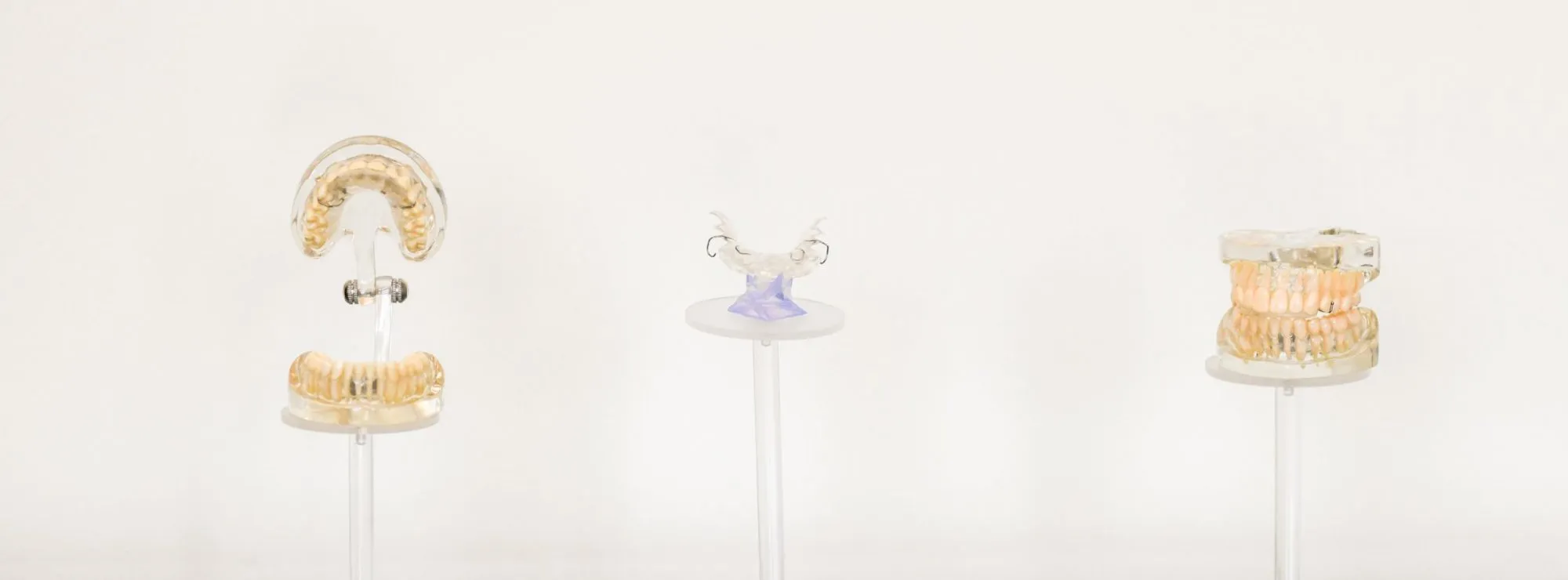
The ideal way to decrease the inflammation within any joint is to rest it allowing the inflammation to diminish. That is exactly how the Urbanek Device and Protocol works. Just like a set of crutches for the knee or a sling for tennis elbow.
You treat TMD just like you would treat a damaged knee or elbow. You treat TMD with coordinated thought, not Specialists.
Comments are closed.