


#166 Why Not Use Common Sense and a Few Facts to Treat TMD
I have been treating patients with TMD, (Temporomandibular Joint Disorder) for 50 years. In some ways it pains me to say that. It’s difficult to admit I have been practicing for 50 years. That’s a long time. It is also an undisputed testament to my age. On the other hand, I’m very proud to have done my best to be of service to patients for that long. As an OMS (Oral and Maxillofacial Reconstructive Surgeon I used my knowledge and skills to treat any number of complicated facial surgical reconstructive problems. Many of these challenged my abilities to figure out the best way to produce a good outcome. But treating patients with TMD proved to be the most difficult.
For the first 36 years of my career, I followed the lead of my surgical colleagues who researched, wrote upon, and taught what was considered standard of care rules of treatment for this confusing disease. Eventually, I came to my own conclusion that no one had the answer. As the surgical techniques applied to TMD became increasingly complicated, the results became less and less effective. One fact was certain. One-third of surgically operated patients would be back within a year or two with the exact same symptoms that originally brought them to me, no matter what kind of surgery performed. This statistic was not good enough for me to continue my quest to treat this disease surgically. When doing surgery for facial growth anomalies, nerve damage, cleft palates, trauma damage, and cancer reconstruction, I was always able to predict the surgical results to a very high degree and produce what was promised. This same standard did not apply to TMD.
The other professionals treating the problem certainly fared no better. Physicians routinely confused the problem with other diseases and misdiagnosed it as migraine headaches, Meniere’s Disease, and ear infections. My general dental colleagues either offered a night guard knowing it was ineffective or refused to treat these patients at all.
That is why in 2014, I gave up doing surgery for the problem and decided to see if I could figure out what others must have missed. There is always a solution to a problem. If you can’t find it, you are either asking the wrong question or asking the wrong person or source. With a strong background in medicine and dentistry, including degrees in cell biology and NIH research fellowship studying facial growth and development, I hoped I might discover the missing piece to the TMD puzzle.
Looking back through the retrospective scope, I can attest to the fact the missing puzzle pieces were already on the board, but nobody was looking at them. Starting from scratch, I first began to interview patients with the problem to get as much data as possible from the patient’s point of view. Among the many things I heard, I learned that placing something, almost anything, between the front teeth made the symptoms feel better. Every dentist learns in school that the anterior teeth limits loading of the TMJ to 10% of normal jaw function. Placing something between the front teeth unloads the TMJ. The second puzzle piece originated from my experience doing over 2000 TMJ surgical procedures. In each case, chronic inflammation was present in the TMJ at time of surgery. And the third piece came from my knowledge of orthopedic problems and surgery. A damaged joint, through the intervention of the autonomic nervous system, and stimulated by chronic inflammation, creates painful symptoms distant from that joint. It works out that TMD and Tennis Elbow is the same disease. And both are best treated in the same way. Just unload the joint long enough and consistent enough to allow the chronic inflammation to diminish. At that point, the pain goes away. Tennis Elbow is treated with a sling and TMD is treated by unloading the TMJ.
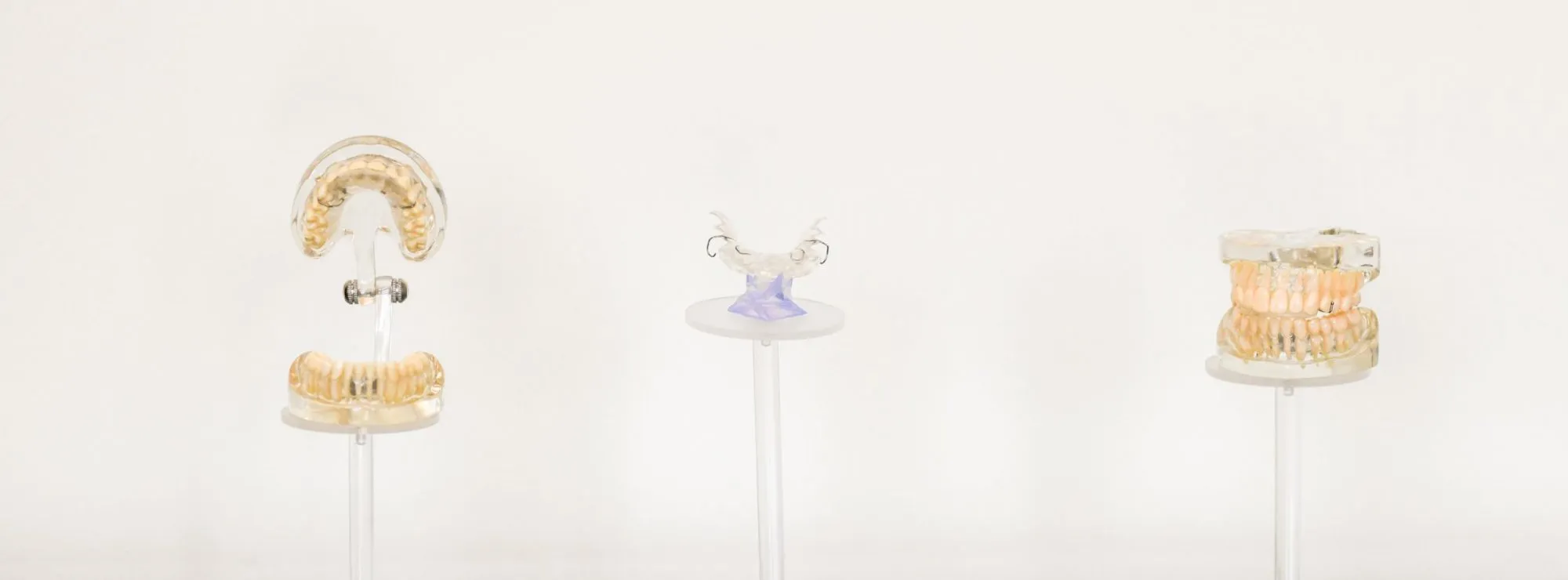
From there, Urbanek Device and Protocol was established. We now teach doctors throughout the US and beyond how to treat TMD successfully using this technology.
Comments are closed.