



#157 The Protocol Is More Important Than the Device
By: Anthony Urbanek, DDS, MS, MD
To treat TMD effectively all you need to do is decrease the inflammation within the Temporomandibular Joint enough to make the symptoms disappear. This same principal works for any of the other joints in the body. For example, if you have a painful knee, different kinds of knee pains are generated by inflammation within the knee. You can do several things to try and decrease the inflammation in the knee. Your first line of defense would be to take the pressure or force off the knee using crutches. That works predictably well, but who wants to use crutches for the rest of your life.The next level of treatment would be the use of drugs. Pain medicine, like over the counter Tylenol or prescribed opioids are somewhat effective for hiding the symptoms temporarily, but taking too much Tylenol can cause damage to your liver and kidneys, and taking opioids very long will create addiction. Taking non-steroidal anti-inflammatories like ibuprofen or aspirin are very effective at first because they directly decrease the inflammation, but after a few weeks’ runout of steam and no longer effective.The next level of care for a damaged inflamed knee is to inject the knee with anti-inflammatory steroids. This works pretty well for a while until those recurrent injections are no longer effective, or the serious side effects of steroids damage other functions of the body.The final level of care for a damaged inflamed knee is prosthetic replacement of the knee joint or “Total Knee” as that surgery is called. This procedure will cost between $60,000 and $100,000 with some patients stating the procedure was the best decision, and others stating it was the worst decision.
In each of these levels of treatment, the patient’s participation in their own care was limited to taking a pill or having someone else do the work except for option #1, using crutches to make the symptoms go away. It is statistically proven that if you stay on the crutches, the knee pain will go away.
Now let’s convert the above information as it applies to treating Temporomandibular Joint Disorder (TMD). The Temporomandibular Joint (TMJ) operates and responds to treatment like any other joint in the body. You can drug the body with pills or injections to suppress the TMD symptoms. You can take pills until the drugs no longer work or the side effects overwhelm the benefits. You can inject drugs into the TMJ or muscles until the frequency of treatment and side effects diminish the benefits. You can do a total joint replacement for $80,000 with mixed success.
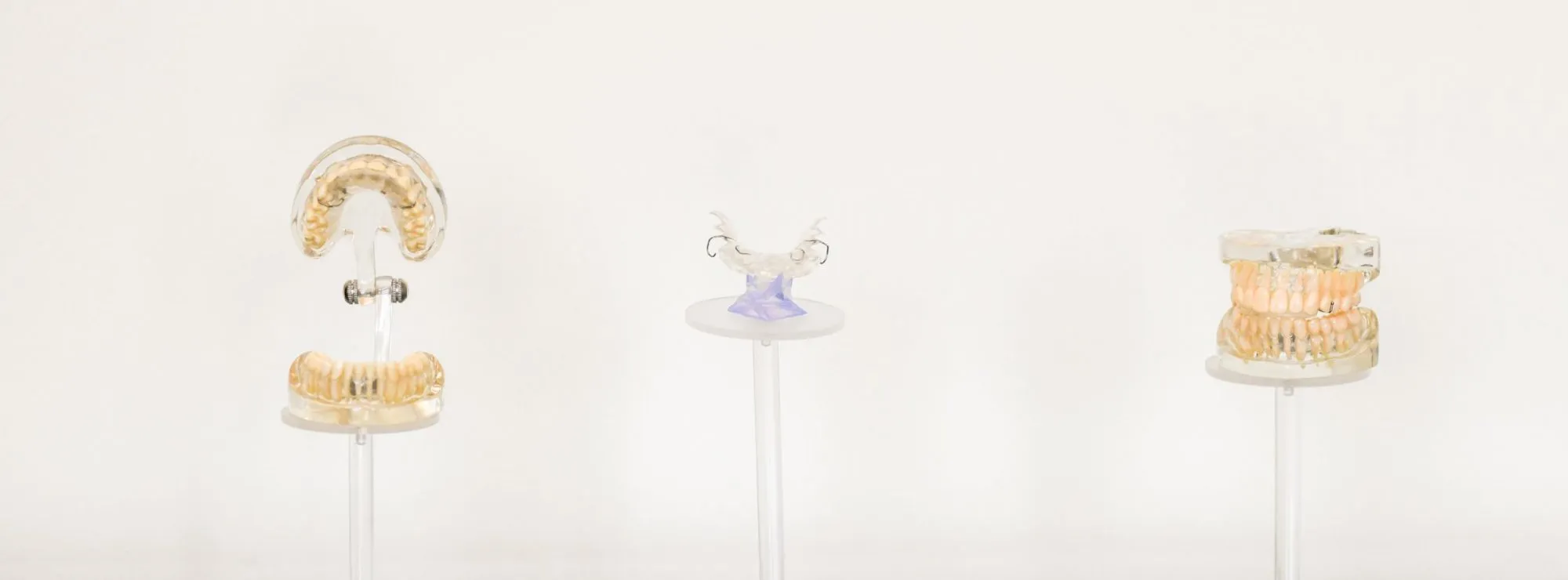
Or you can use an intraoral device that rests the TMJ like crutches rest the knee with the same 100% predictability.
However, unlike crutches for the knee, a device that rests the TMJ does not have to be used 24/7 forever. You do have to start 24/7 for the first two months. This is then followed by using the device during sleep indefinitely. (For the rest of the patient’s life) This is the protocol for use. Twenty-four/seven for 2 months, then nighttime for the rest of your life.
This protocol has been developed over years and successful application to over 5000 patients with TMD. The 24/7 portion forces the inflammation within the TMJ to subside as rapidly as possible, and the following consistent use at night keeps the inflammation diminished to a level that inhibits the generation of symptoms. Fifteen percent (15%) of patients find they need to temporarily wear the device a few extra hours per day, especially during times of stress like driving in traffic or focusing on the computer screen
But it is the patient’s responsibility to make the device effective. Just like it is the patient’s responsibility to stay on the crutches. Patients taking some responsibility for their own care is called PATIENT COMPLIANCE.
To achieve the predictable 95% success rate using a device that rests the TMJ, patient compliance is critical. Actually, a patient’s compliance with the protocol is more important than the device. The treatment is called the Urbanek Device and Protocol for good reasons. The device and protocol work together. One without the other is not effective.
Comments are closed.