

# 186 The Proper Role for Orthodontists Treating TMD
Through the years I have talked to hundreds of patients with TMD symptoms that were told by orthodontists that the solution for their problem was to straighten their teeth. The theory behind orthodontic treatment for TMD is as follows. Malocclusions encourage bruxism. Bruxism is one of the known causes of joint damage and TMD. Straight teeth discourage bruxism by removing all the interferences in the bite. Limiting bruxism limits TMD symptoms.
Sound logical right? WRONG. First, we don’t understand the mechanism of bruxism. The only thing we can say for sure is that bruxism (clenching and grinding the teeth) is related to stress and anxiety. But we do not know how stress and anxiety convert into bruxism. There are many theories and we do know it has something to do with the pathways within the brain. But we really don’t know how anxiety converts into rhythmic jaw motion. We do know that some people who have malocclusions are more prone to developing TMD.
But patients with TMD treated with orthodontics are not likely to get better no matter how straight their teeth become. When you understand the pathophysiology of TMD you will understand the real part an orthodontist has in helping treat TMD. (Pathophysiology: A description of the mechanism of what happens in the body to make a person sick).
Pathophysiology of TMD simplified: Chronic inflammation within the Temporomandibular Joint, (TMJ) create each and every symptom of TMD directly. Chronic inflammation is created when the TMJ is damaged and does not progress to normal healing. There are 3 circumstances that damage the TMJ, 1, Bruxism, 2, Acute trauma, and 3, functional malocclusion. Notice the third cause is FUNCTIONAL malocclusion. Functional malocclusion is defined as a significant difference between the two distinct “bites” that is present in every human. Centric Occlusion or bite #1 is the way your teeth fit together when you are chewing. Centric Relation or Bite #2 is the way teeth fit together when the jaw joint is in its most rearward and healthiest position. Most people have a small difference between bite #1 and bite # 2. When the difference between bite #1 and bite #2 becomes increasing great, this creates damage to the joint. It is then a FUNCTIONAL malocclusion. Fixing functional malocclusion is done using a variety of orthodontic devices and fixtures. When the functional malocclusion is extreme, orthodontics alone will not by itself fix the problem and an oral and maxillofacial surgeon will be asked to work with the orthodontist to surgically move the jaws into their proper position so the orthodontist can get the teeth to fit together and close the gap between bite #1 and bite #2. This is called orthognathic surgery, literally “straight jaw” surgery.
The orthodontist does have a very important role in treating TMD but does not start out by straightening the teeth.
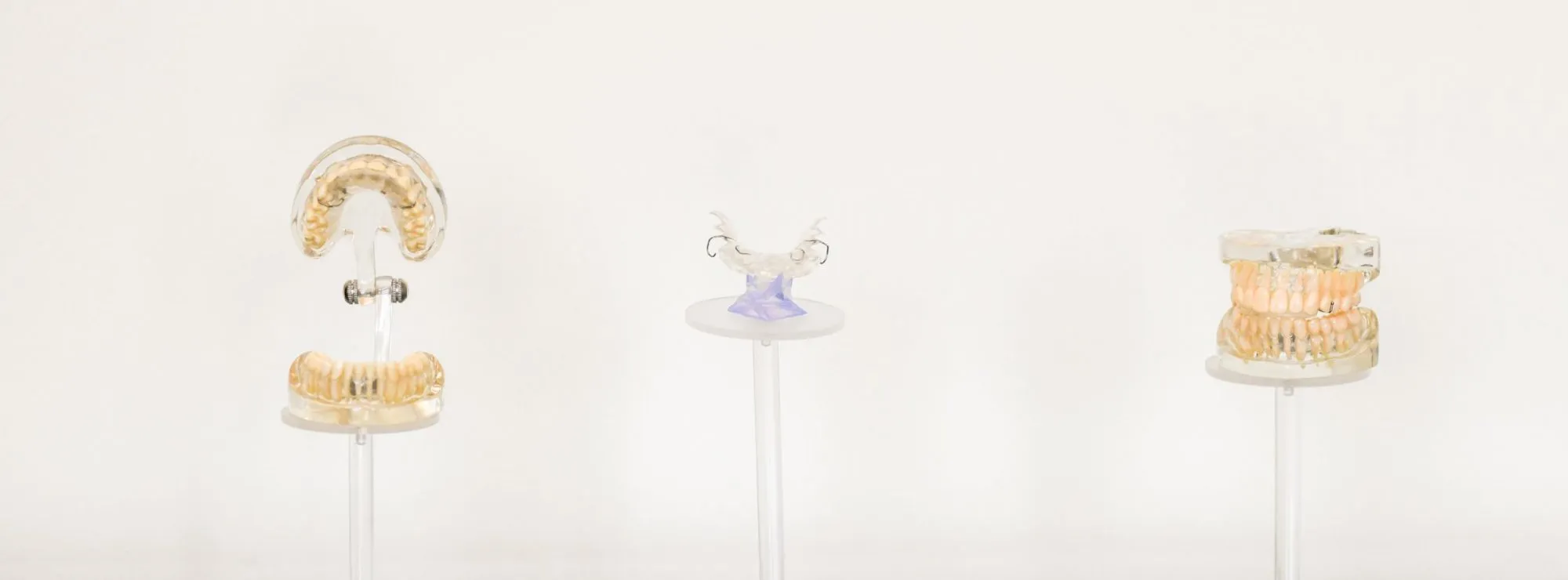
The proper sequence of treatment would be to place the patient in a device that unloads the TMJ like crutches unloads the knee, of a sling unloads the elbow to relieve inflammation. The first treatment should always relieve the pain and other TMD symptoms. This is the value of the Urbanek Device and Protocol. Once the symptoms are relieved, it will become obvious when functional malocclusion is the cause or possibly combined with the other two things that damage the TMJ. That is when the dentist or orthodontist should advise the patient that the functional malocclusion should be corrected to prevent further damage to the TMJ. When the cause of the damage to the TMJ is removed, the likelihood of long-term success is multiplied.
The orthodontist can, of course, initiate treatment for TMD with the FDA cleared, independent university study validated Urbanek Device and Protocol. There are now dentists and orthodontists in 21 states and Canada that are licensed to use the Urbanek Device and Protocol. The orthodontist does not have to rely on another dentist to start treatment. Then, if a functional malocclusion is identified, orthodontic treatment can be initiated for resolution of the functional malocclusion.
Comments are closed.