

#181 TMD, What’s the Worst That Can Happen?
The title for this article could also be, “How Much Pain and Disfunction Can a Patient Stand?”
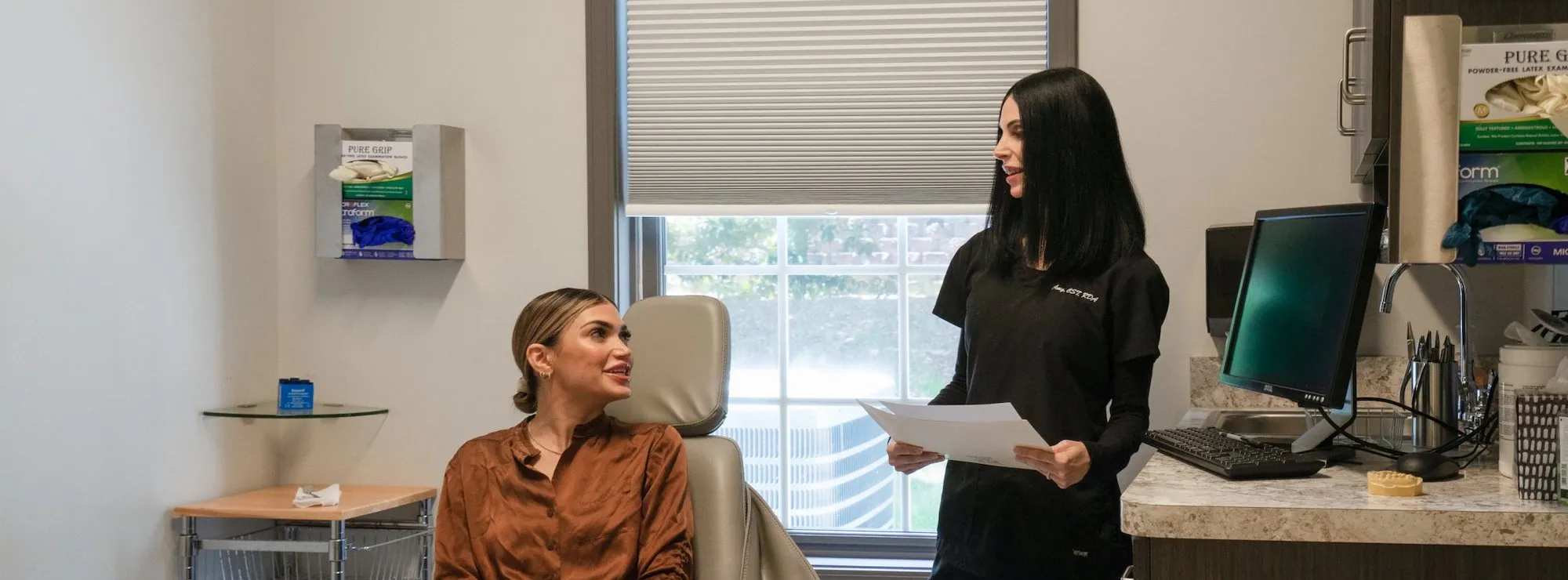
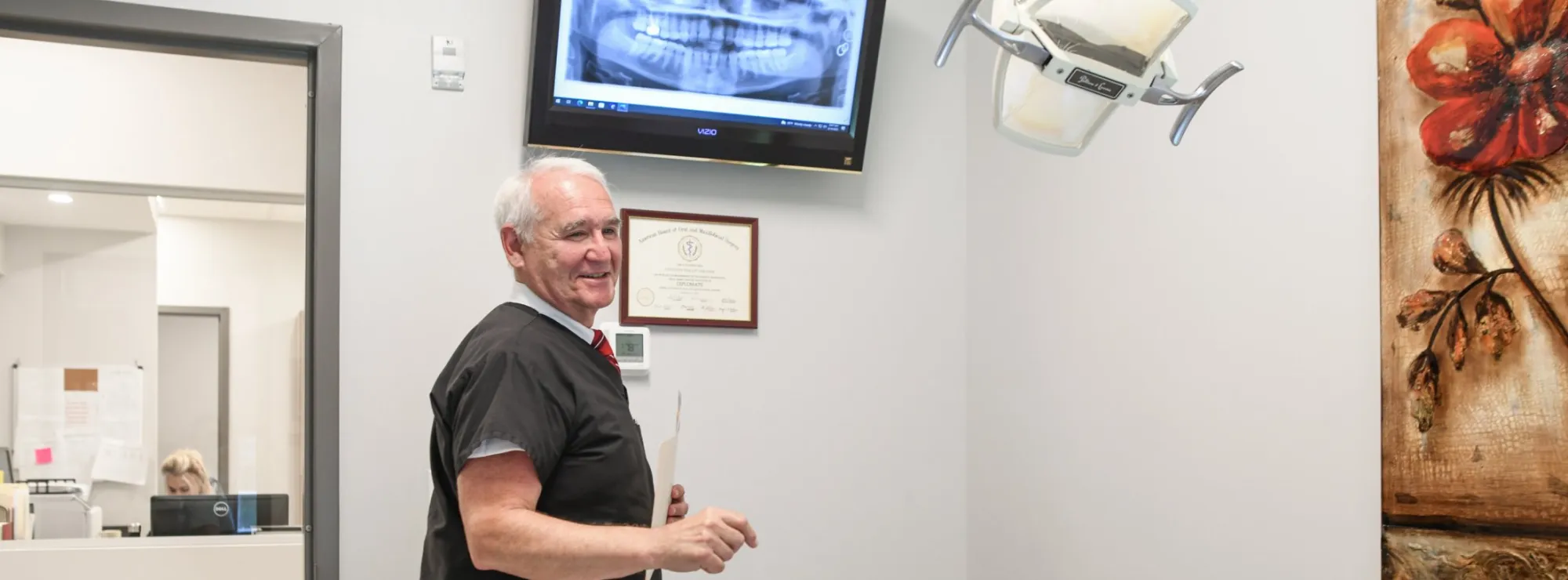
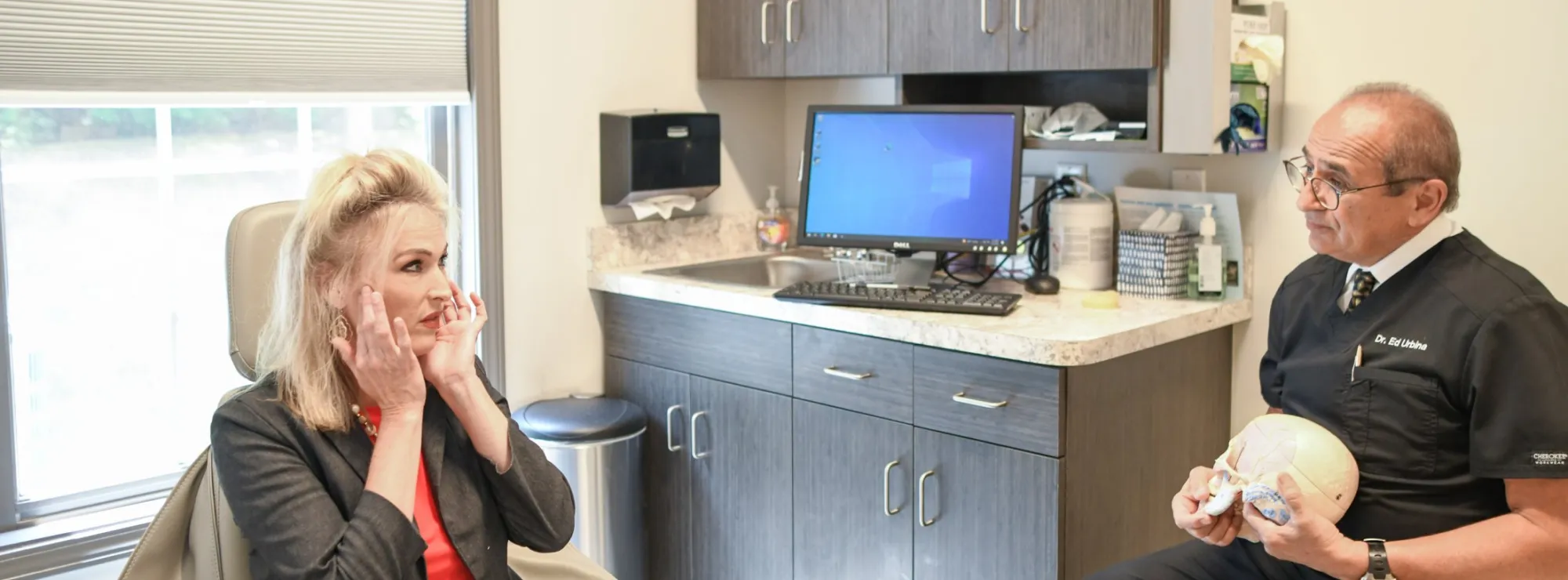
Last Thursday I walked into an examination room to begin a consultation with a 54-year-old female I had never seen before. After doing over 5000 consultations for patients referred to our practice, you might imagine I have developed a routine out of habit. I even joke with patients about the first few steps of my routine. 1) Introduce myself. 2) Make sure both patient and doctor are there for the same reason, —-Consultation for Temporomandibular Joint Disorder, TMD. 3) Review the x-ray on the computer screen or the TV screen on the wall within sight of the patient. 4) Sit down on a stool facing the patient, and 5) Ask the patient to list the symptoms that they are here to solve.
These are always the first five steps of my consultation. But Thursday morning I did not get past step 3 before I realized this consultation was going to be far beyond the usual and customary.
On reviewing the panoramic x-ray, it showed a huge amount of damage to both temporomandibular joints, (TMJ’s). On a scale of one to ten, ten being the worst, the degenerative damage to both joints were scaled at about eight. But the most obvious feature on the x-ray was a small wire ligature located at the inferior border of the right lower jaw, (mandible). I was very familiar with this ligature and position. It immediately told me that this patient had undergone a unique type of TMJ surgery. The location and type of ligature even signaled where the surgery was done and the surgeon who performed the surgery. Without a word from the patient, we had only agreed so far on the reason for the consultation, I shared with her the exact type of surgery that had been performed and even the time frame it was done, which was about 15 years prior. The patient then confirmed that I was correct on my assumptions about the surgeon, hospital, and time frame. But my next question was the real shocker when I sat down and asked, “What are the symptoms you are here to solve?” Her answer was. “I can’t open my mouth.” How long has it been since you have been unable to open your mouth? She answered, “Seven Weeks”
Sure enough, on examination, she was only able to get one finger between her front teeth no matter how hard she strained with considerable pain. As it turned out on further questioning, she had been at some level of increasing pain and limitation of ability to chew since about a year after her surgery 15 prior. The patient’s right side, surgical side, had varying degrees of intermittent pain throughout the last fourteen years, but it was the unoperated side (left side) that was now the problem. The left side had a similar history to the right side. Seven weeks ago, the intermittent locking and pain of the left side changed into a permanent lock. One finger breath or 15 mm of space between her front teeth limited he to a liquid diet for the past 7 weeks and the pain was constant.
When I asked why she did not go back to her original hospital and surgeon once the symptoms returned within a year, she just shrugged and said she had asked several other physicians and dentists for help, and no one knew what to do or had any idea how to help her. She had already tried the surgery, and it failed.
This patient is an example of how bad TMD can get. Her symptoms began in her 20’s with painless clicking of both joints. Besides the obvious degree of pain and suffering that this patient experienced over her 30 years of headaches, earaches, jaw pain, neck pain, tinnitus, subjective hearing loss, vertigo, upper back and shoulder pain, arm/hand/finger tingling and numbness, and now complete jaw locking, she was in danger of any accident that required immediate surgery. In an emergency, because she could not get open beyond 15 mm, an anesthesiologist would find it impossible to place a breathing tube (endotracheal tube) requiring an emergency tracheostomy to save her life. All would be contingent on a surgeon being immediately available to do the “Trach”.
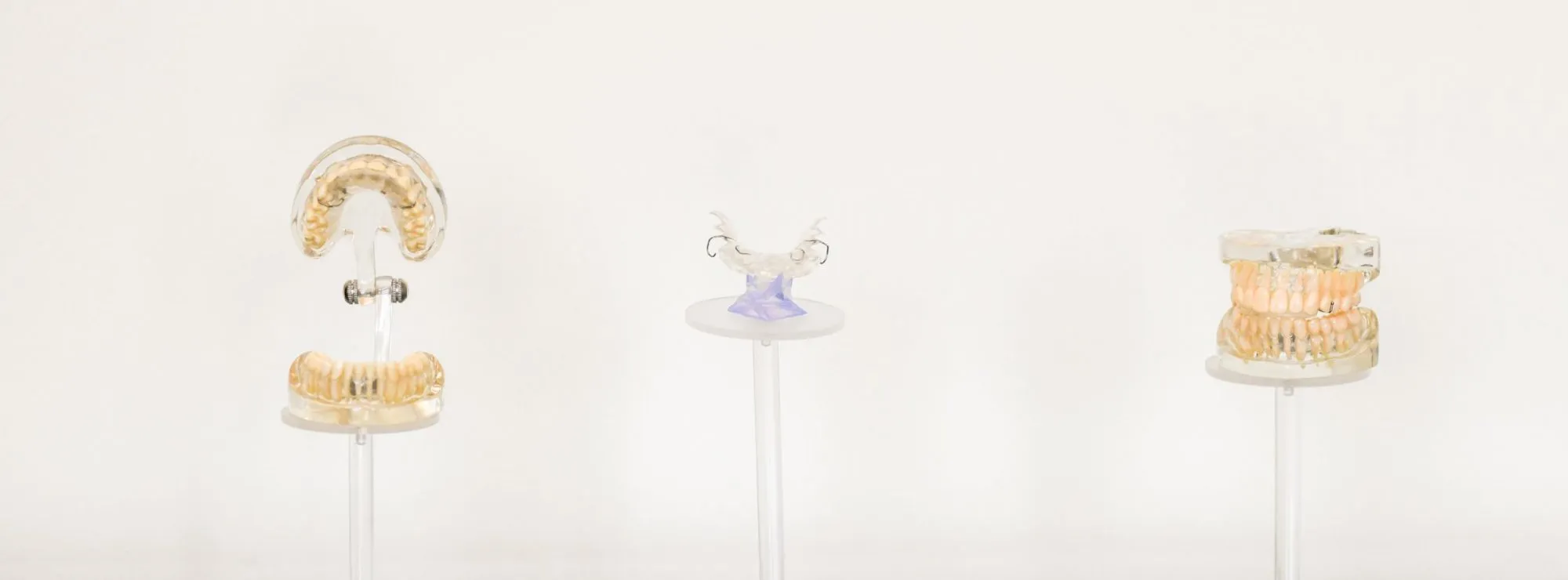
Fortunately, with 50 years of TMD experience under my belt, the first 36 being surgical experience, and the last 15 years limited to non-surgical care, I knew this patient could be salvaged by using a simple device, (tool) and protocol that unloads the TMJ like a set of crutches unloads a damaged knee. We had to call it the Urbanek Device and Protocol because on survey, our patients wanted to call it “Saved MY Life Device”. I found that suggestion as humorous as the “Vega Matic of past TV fame”. So, we had to brand it “Urbanek Device and Protocol”
All’s Well that Ends Well. By using a little local anesthesia into the left joint, I was able to get her open enough to temporarily get a scanner into her mouth for impressions. She’ll be back in about 10 days for device delivery and within a few weeks of beginning her initial protocol, I expect her to have significant relief from her painful symptoms and gradual increase in ability to open her mouth without pain as the chronic inflammation within the TMJ subsides. At her insistence, I gave her permission to go to the food court at the Cool Springs Mall and get something to eat that wasn’t liquid, before the effects of the local anesthesia wore off.
TMD starts with painless clicking. This patient is a good example of how bad it can get. “TMD, What is the Worst That Can Happen?” Don’t let this happen to you.
Comments are closed.